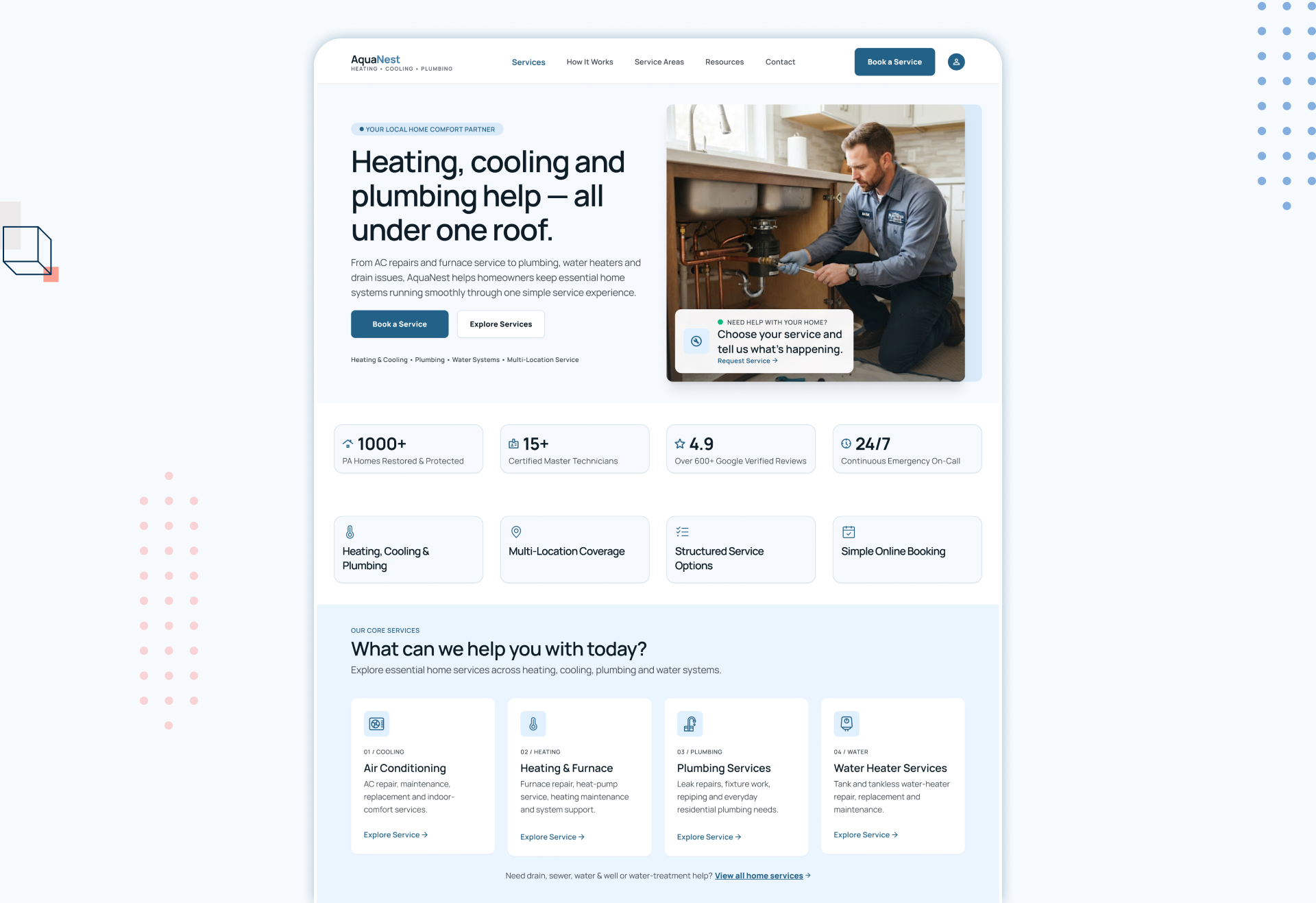
A US-based HVAC home-service company was operating with a static website where almost every meaningful content update required developer involvement.
New service pages, new location pages, copy changes and routine content updates had to be made in code, reviewed and deployed.
For a company operating across multiple services and locations, this created a clear operational bottleneck.
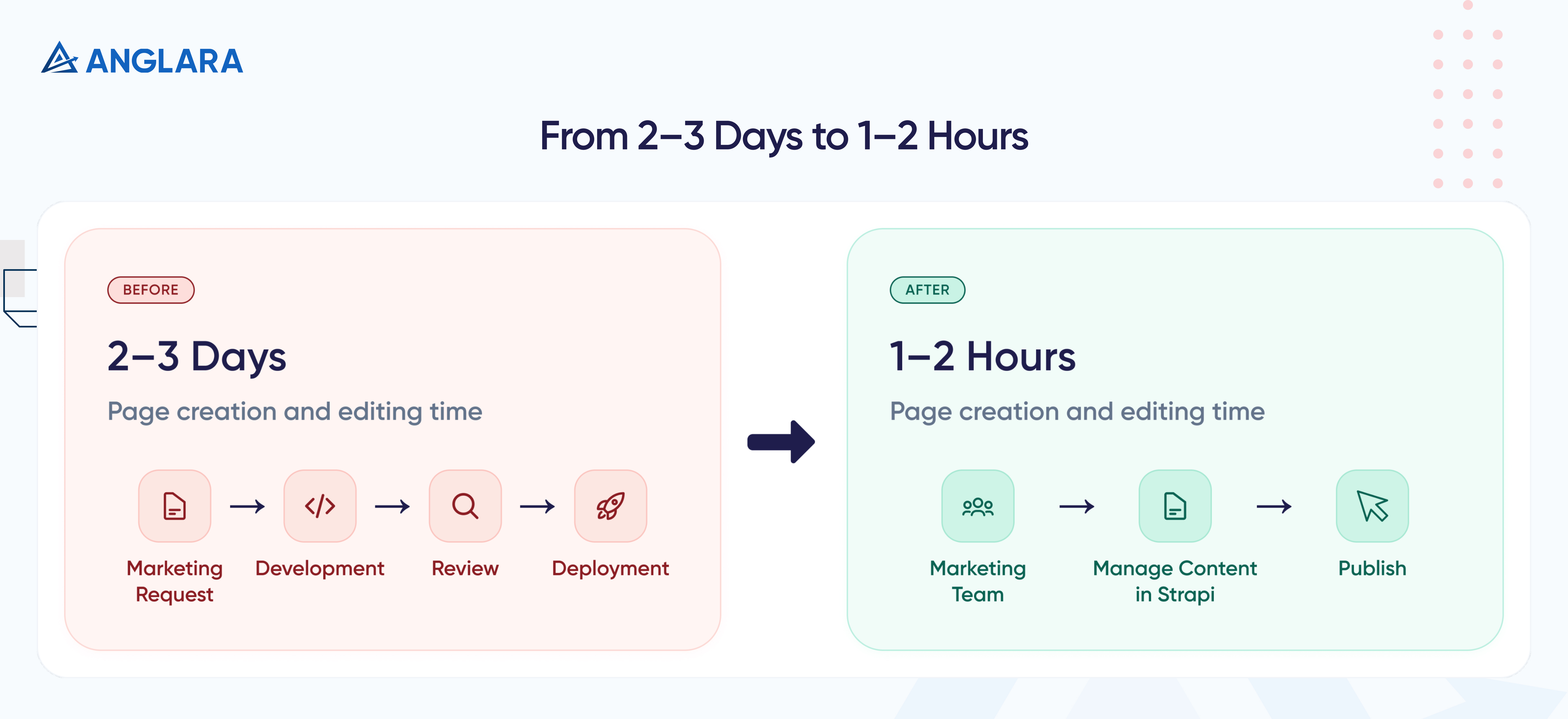
A typical page creation or meaningful edit could take 2–3 days.
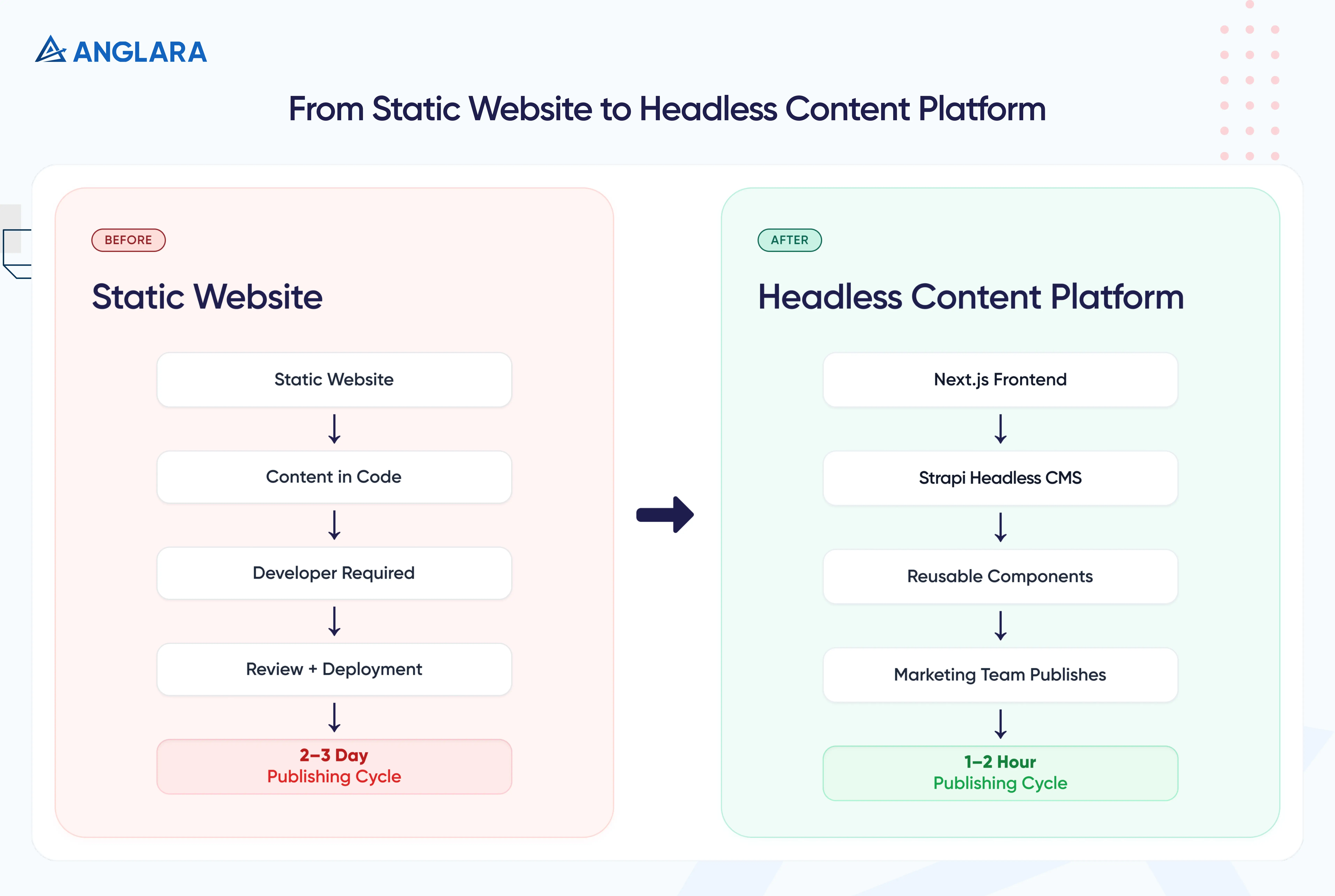
We rebuilt the website using Strapi as the headless CMS and Next.js as the frontend, creating a structured, component-based content platform that the marketing team could manage directly.
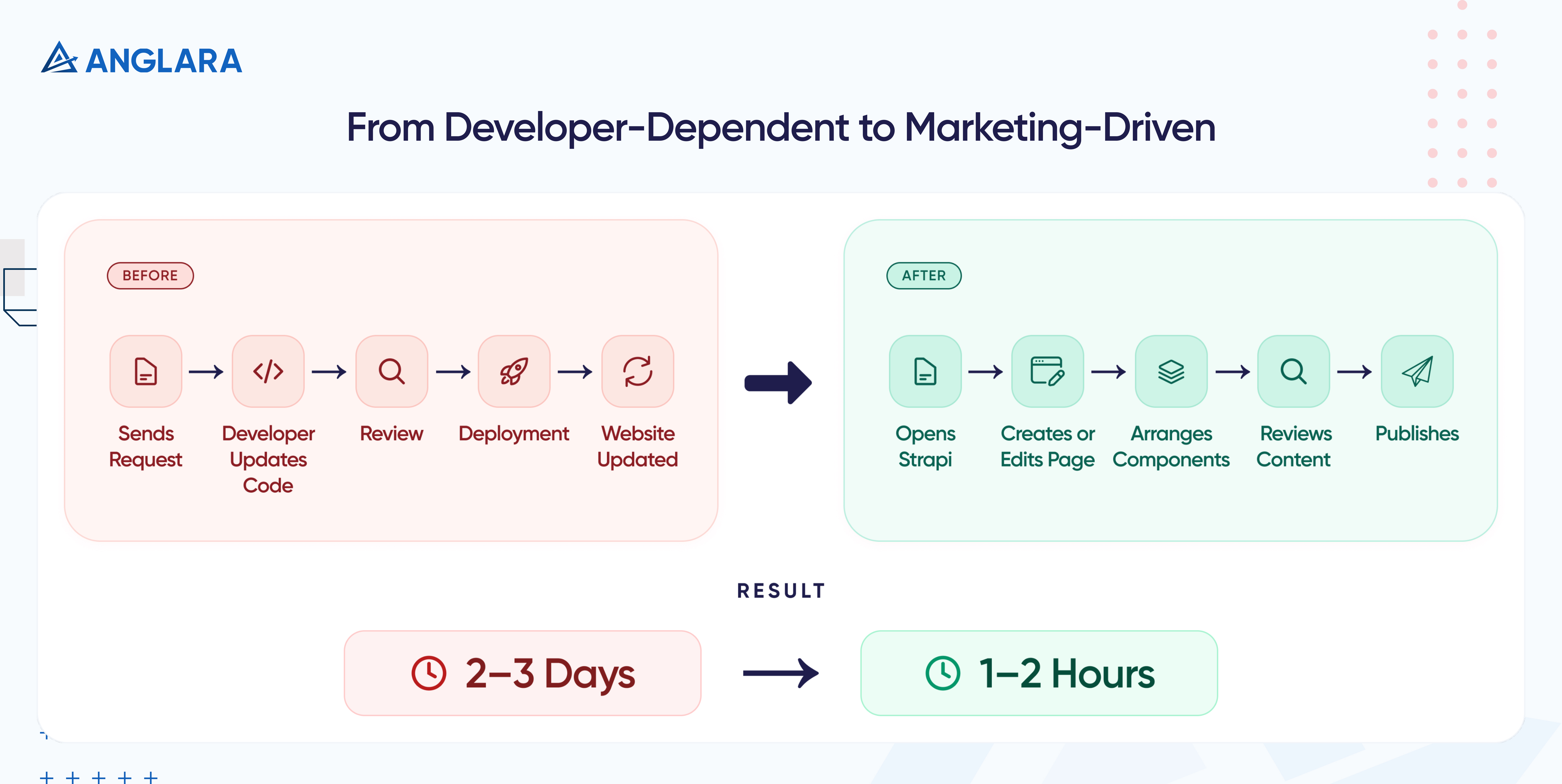
2–3 Days → 1–2 Hours
The Challenge
The existing website was static and content was tightly coupled with the codebase.
Even relatively simple website updates required a developer.
The workflow typically looked like:
Marketing Request
↓→
Development
↓→
Review
↓→
Deployment
That model becomes increasingly difficult for a home-service business operating across multiple locations and service categories.
Every new location, service or campaign created another dependency on the development team.
The business needed a website that could grow without turning routine content management into an engineering task.
The objective was simple:
Developers should build website capabilities.
The marketing team should be able to manage website content.
The Solution: Strapi + Next.js Headless Architecture
We rebuilt the website using a headless architecture with:
StrapiStrapi as the content management & backend layer.
Next.jsNext.js as the frontend application.
Instead of individual pages being hard-coded, content was moved into structured CMS collections and reusable page components.
This separated content management from frontend development.
Developers retained control over the platform, components and design system, while the marketing team gained control over day-to-day content publishing.
A Component-Based Page Builder
One of the core parts of the rebuild was a reusable page-building system inside Strapi.
Editors can assemble pages using predefined components such as:
Hero sections
Content sections
Service blocks
Location information
Testimonials
FAQs
Calls to action
Forms
Sections can be arranged based on the requirements of each page.
Instead of asking a developer to build a new page from scratch, the marketing team can reuse existing components and manage the content directly through the CMS.
This creates flexibility for editors while maintaining consistency across the website.
Built for Multiple Locations and Services
The architecture was designed around the needs of a multi-location, multi-service home-service business.
Locations and services are structured inside the CMS instead of being individually hard-coded into the frontend.
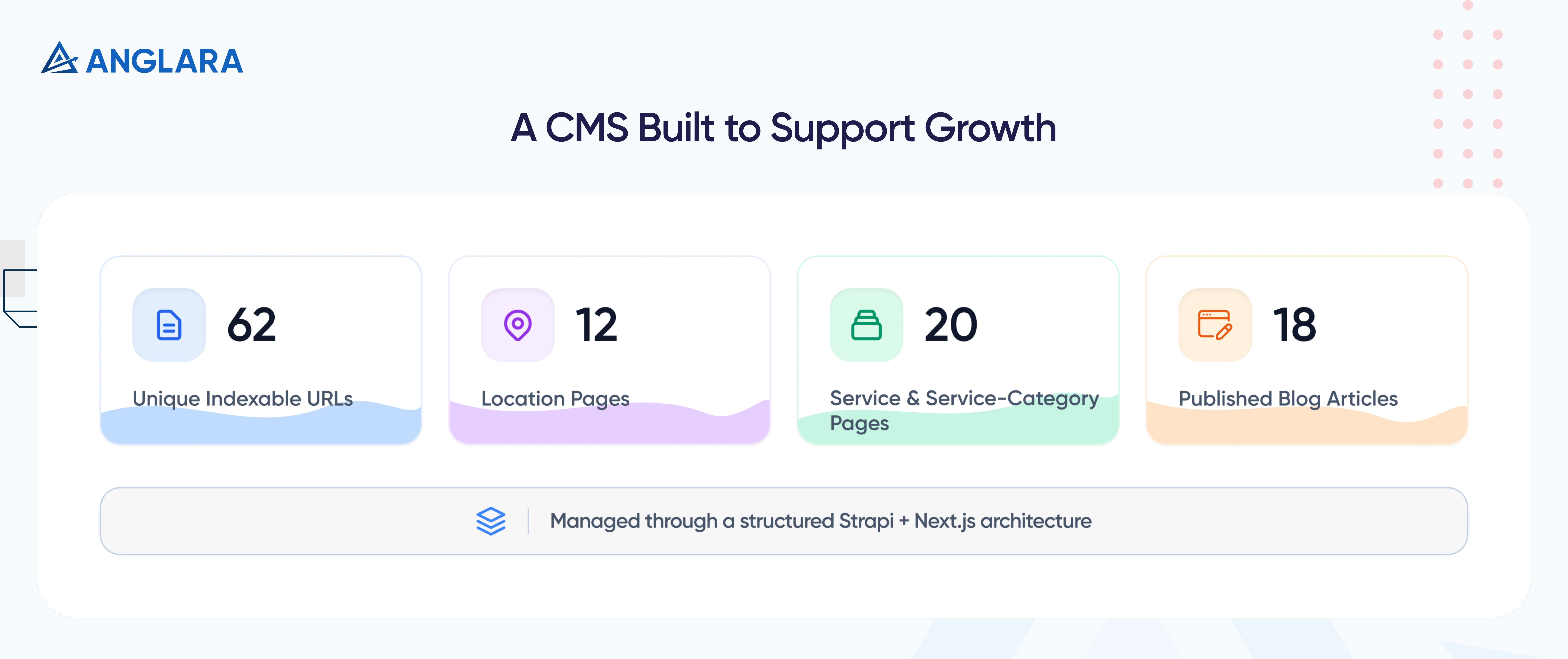
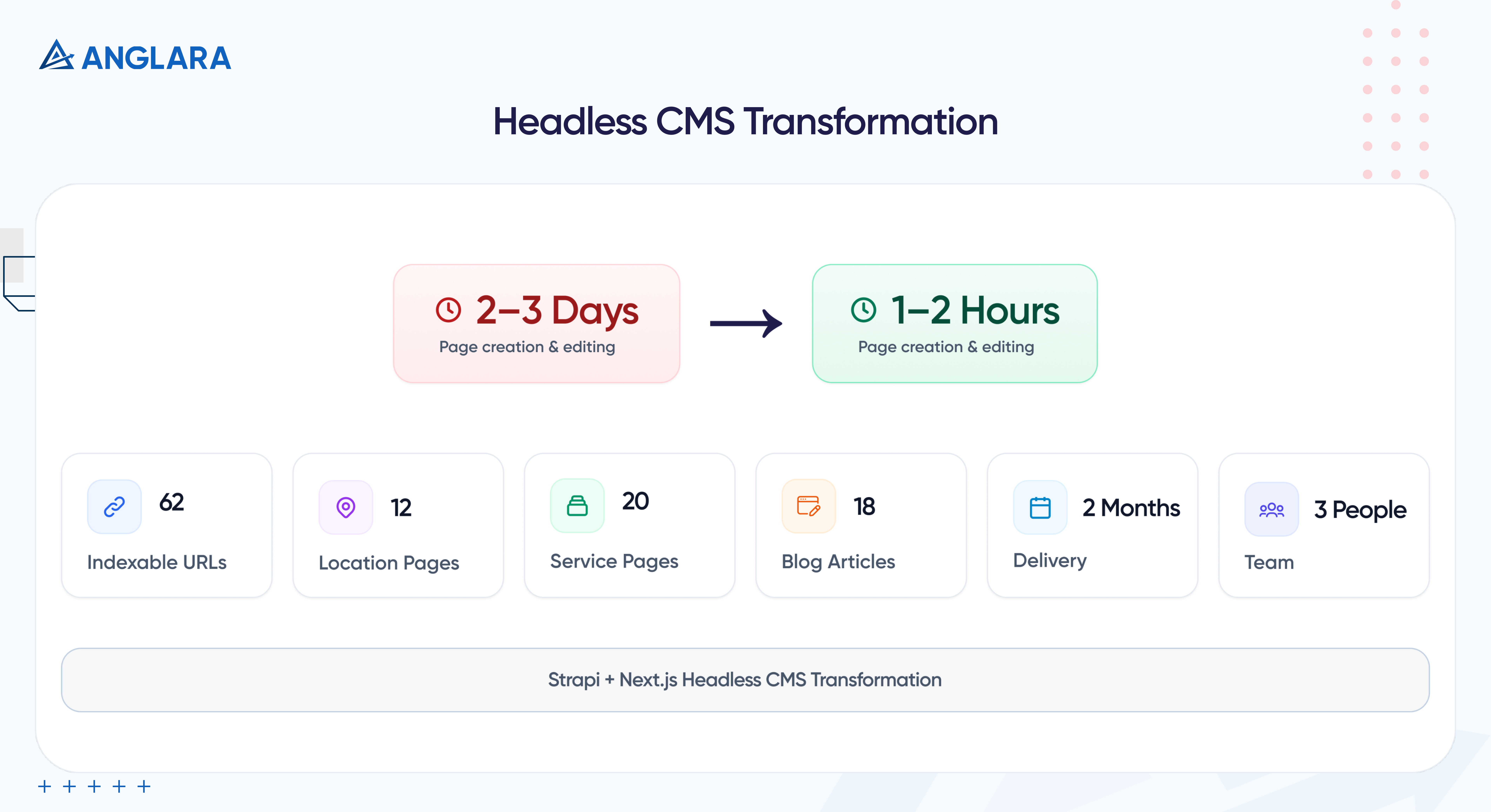
Current Content Scale
62Unique indexable URLs
12Dedicated location pages
20Service and service-category pages
18Published blog articles
The 12 location pages are structured under the website's service-area architecture. Pasted markdown The sitemap also contains 18 individual published blog articles.
The resulting content architecture allows the internal team to continue expanding locations, services and landing pages without requiring every new page to be manually created in code.
Forms and Lead Management Inside Strapi
The CMS also handles website enquiry submissions.
Forms on the frontend are connected to the Strapi backend, allowing enquiries and lead records to be managed within the same administrative environment used for website content.
This gives the internal team a central backend for:
Content
Pages
Locations
Services
Forms
Lead records
The goal was to make Strapi more than a content editor — it became the operational backend for the website.
Analytics Foundation
Google Analytics 4 and Google Tag Manager were integrated into the new platform.
This gave the company the technical foundation to track website activity and future marketing performance.
No traffic, ranking, Core Web Vitals or conversion-growth claims are included in this case study because those metrics were not part of the verified outcome data.
The primary measured improvement was operational:
Page creation and editing dropped from 2–3 days to 1–2 hours.
The Result: From Days to Hours
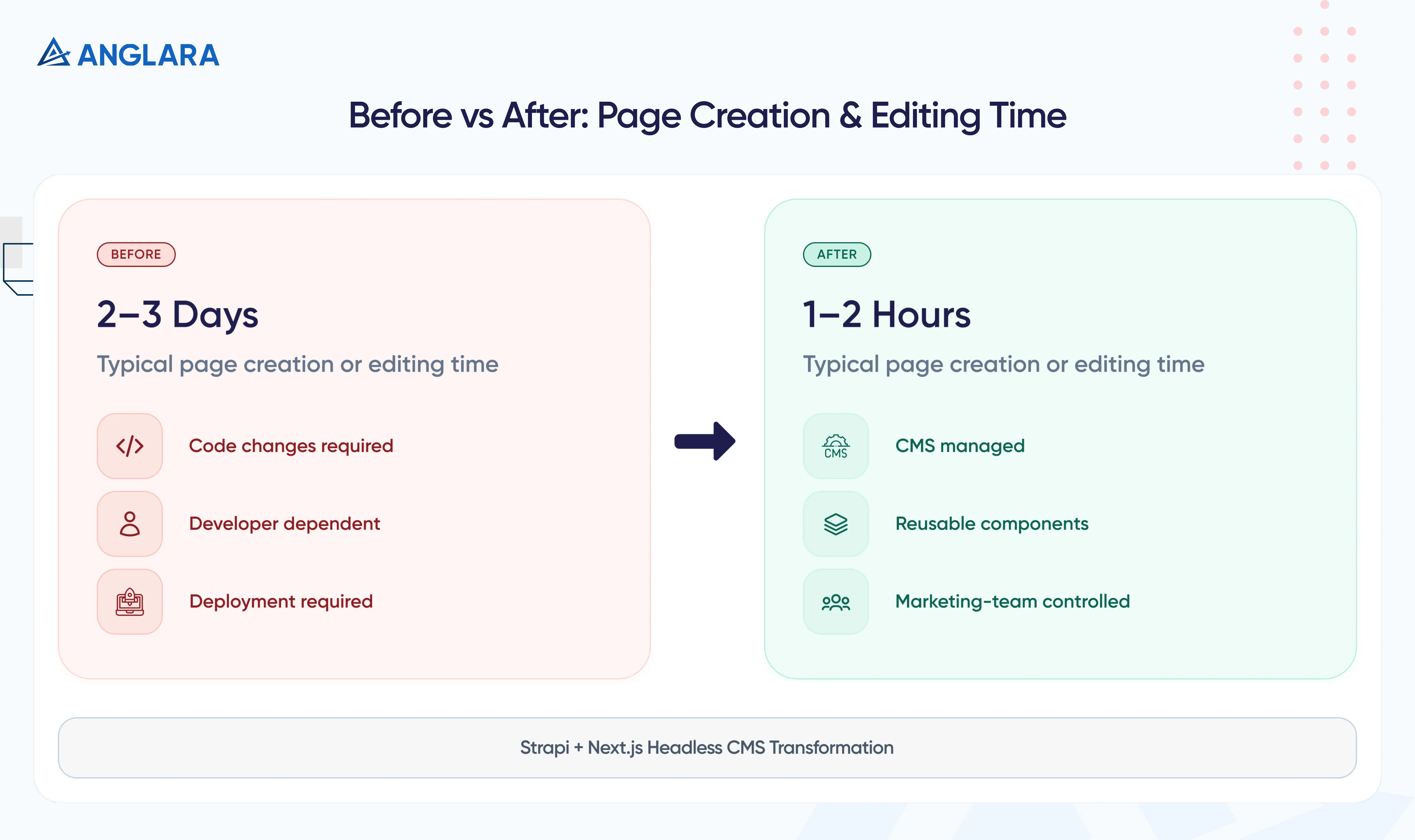
Before the rebuild, creating a new page or making a meaningful page update typically required:
Before
After
TIME:2 – 3 Days
TIME:1 - 2 hours
PROCESS:The process depended on developer availability, implementation, review and deployment.
PROCESS:Became the typical timeframe for creating or editing a page through the CMS.
The website moved from a developer-dependent publishing model to a marketing-managed content platform.
What Changed Operationally
Before
After
Content was tied to code.
Content is managed through Strapi.
New pages required developer involvement.
Pages are assembled using reusable components.
Updates had to move through a development and deployment cycle.
Locations and services are structured centrally.
Location and service expansion created additional engineering work.
Marketing can create and edit content directly.
-
Forms and leads are managed through the same backend.
-
The website can expand without requiring a custom development process for every new page.
Delivered in 2 Months by a 3-Person Team
The complete transformation was delivered in approximately:
2 Months
with a:
3-Person Team
The project included:
Next.js frontend development
Strapi CMS implementation
Content architecture
Reusable page components
Multi-location structure
Multi-service structure
Form integration
Lead management
GA4 integration
Google Tag Manager integration
Editor documentation and handover
Making the Internal Team Independent
The project did not end with development.
An editor guide was provided so the internal team could confidently manage the new CMS.
The documentation covered:
Creating pages
Editing existing content
Managing reusable sections
Arranging page components
Managing locations
Managing services
Routine CMS operations
The goal was to ensure that the company did not simply receive a more modern website.
They received a platform their own marketing team could operate.
2–3 Days → 1–2 HoursTypical page creation/editing time
62Unique indexable URLs
12Location pages
20Service and service-category pages
18Published blog articles
2 MonthsProject delivery
3 PeopleDelivery team
More Than a Website Rebuild
For a multi-location home-service company, content needs can grow quickly.
New services, service areas, campaigns and educational content should not require a new engineering project every time.
By separating content from code, the new Strapi + Next.js architecture changed how the website operates.
Developers maintain the platform and reusable capabilities.
The marketing team manages the content.
The clearest result is measurable:
What previously took 2–3 days can now be completed in approximately 1–2 hours.
The company now has a structured content platform designed to support continued website expansion without making routine publishing dependent on the development team.
Is Your Marketing Team Still Waiting on Developers for Website Updates?
Anglara builds Strapi + Next.js headless CMS platforms for businesses that need greater
control over content, locations, services and landing pages